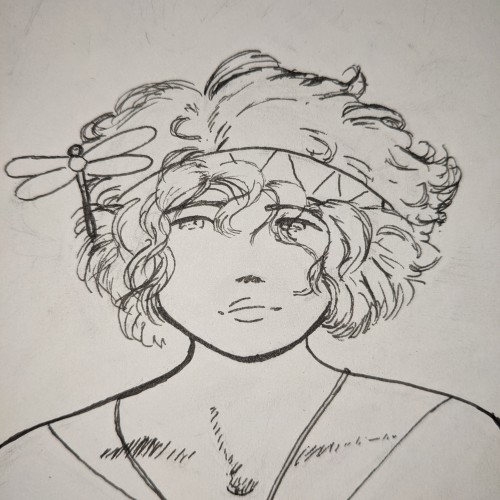
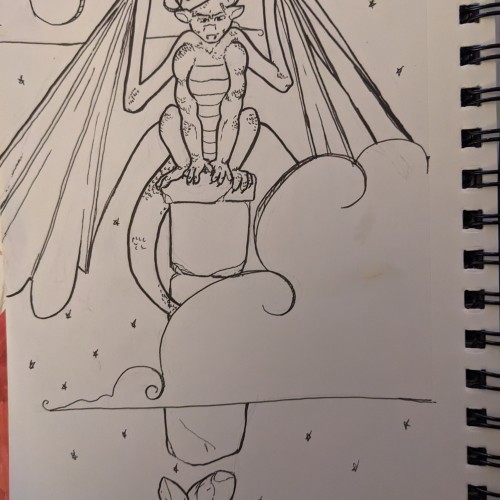
Posted the sketch of this earlier, but I thought the ink looked nicer, so here you are! I love dragonflies. Deadly hunters, slaughtering their prey without mercy, yet beguiling enough to somehow convince humans they are harmless as butterflies. They have their own sort of deadly, sleek beauty.
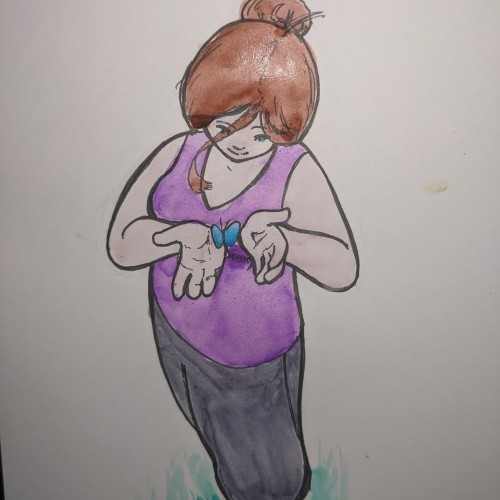
I'm planning on writing and illustrating a superhero comic soon. So I'm practicing dynamic poses, foreshortening, all the stuff. Need to get better at bullets though. Yes, that is a pom-pom. It's the only hat she had.
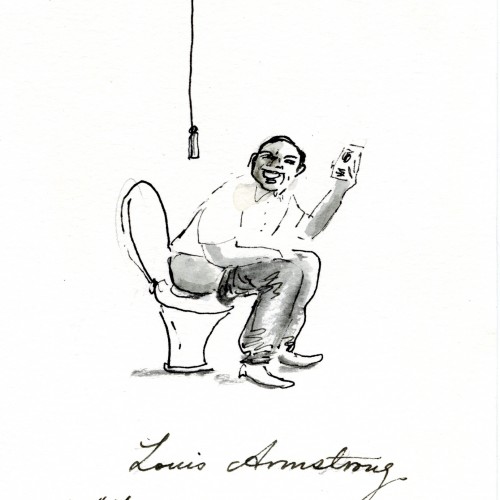
Louis Armstrong (1901–1971)
Armstrong relied on music to lull himself to sleep. Before he could get into bed, however, he had to administer the last of his daily home remedies, Swiss Kriss, a potent herbal laxative invented by the nutritionist Gayelord Hauser in 1922 (and still on the market today). Armstrong believed so strongly in its curative powers that he recommended it to all his friends, and even had a card printed up with a photo of himself sitting on the toilet, above the caption “Leave It All Behind Ya.”
- From Daily Rituals: How Artists Work by Mason Currey
“All music is folk music. I ain't never heard a horse sing a song.”
― Louis Armstrong
#dailyrituals #inktober #LouisArmstrong @masoncurrey
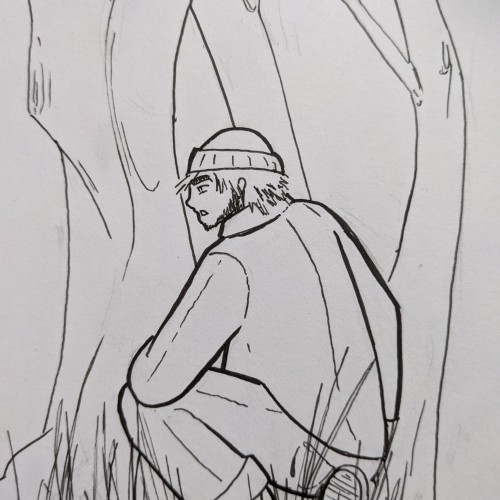
As awesome as summer and winter are, I love the transitional seasons the best, especially fall. It's the best time to do sports, orienteering, bird watching, hikes. The crisp air feels so good, and I love the rustle of the dead leaves and grasses on a windy day. While sometimes I get sad to see the branches bare, I also love looking at and analyzing their structure. I find it fascinating that a tree can go from this mighty, fluttering thing to a spindly, knobby structure and remain fundamentally unchanged. It's a bit of a miracle
This is a major redesign of an OC that I came up with a while back. She's a hardened battle general, fighting on the worst day of her life. The assault has failed, soldiers have been lost, and the darkness has used memories of her husband to lure her to her doom. She's not going to go down easy.
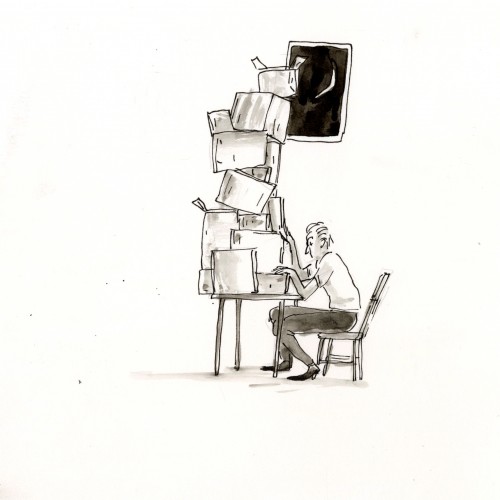
Joseph Cornell (1903–1972)
Cornell worked nights at the kitchen table, sorting and assembling materials for his boxes. It was not easy going. Some nights he felt too fatigued from his day job to concentrate on his art and would sit up reading instead, switching on the oven for warmth. In the mornings, his quarrelsome mother would scold him about the mess he’d left at the kitchen table; without a proper workroom, Cornell was forced to store his growing collection of magazine clippings and dime-store baubles out in the garage.
In 1940 Cornell finally mustered the courage to quit his job and pursue his art full-time—and even then his habits changed little. He still worked nights at the kitchen table, while his mother and brother slept upstairs. In the late morning he would head downtown for breakfast at his local Bickford’s restaurant, often satisfying his sweet tooth with a Danish or a slice of pie (and lovingly cataloging these indulgences in his diary).
- From Daily Rituals: How Artists Work by Mason Currey
#dailyrituals #inktober #JosephCornell @masoncurrey
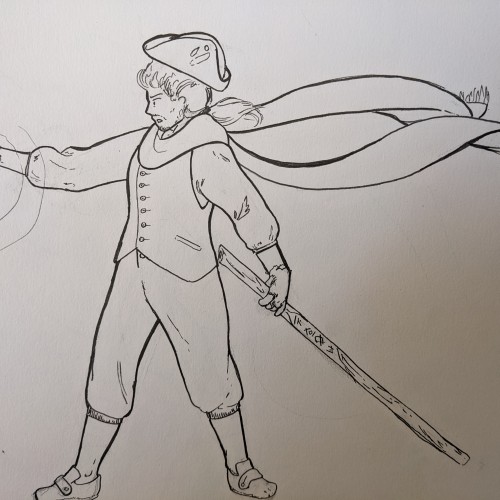
There's so much history to choose from. I feel that if we can add wizards to the middle ages, they should be everywhere else too. Also, all wizards in the seventeenth century wear scarves. It's a rule.
Dmitry Shostakovich (1906–1975)
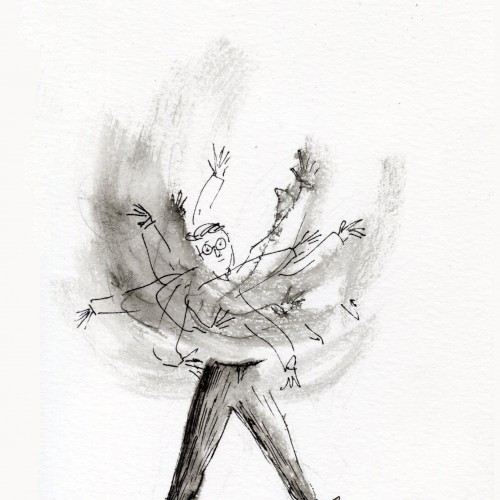
Shostakovich’s contemporaries do not recall seeing him working, at least not in the traditional sense. The Russian composer was able to conceptualize a new work entirely in his head, and then write it down with extreme rapidity—if uninterrupted, he could average twenty or thirty pages of score a day, making virtually no corrections as he went.
But this feat was apparently preceded by hours or days of mental composition—during which he “appeared to be a man of great inner tensions,” the musicologist Alexei Ikonnikov observed, “with his continually moving, ‘speaking’ hands, which were never at rest.”
Shostakovich himself was afraid that perhaps he worked too fast. “I worry about the lightning speed with which I compose,” he confessed in a letter to a friend. Undoubtedly this is bad. One shouldn’t compose as quickly as I do. Composition is a serious process, and in the words of a ballerina friend of mine, “You can’t keep going at a gallop.” I compose with diabolical speed and can’t stop myself.… It is exhausting, rather unpleasant, and at the end of the day you lack any confidence in the result. But I can’t rid myself of the bad habit.
- From Daily Rituals: How Artists Work by Mason Currey
#dailyrituals #inktober #shostakovich @masoncurrey
You can listen to nothing but rock music and wear nothing but black clothing and only date short guys in their thirties. Those are valid preferences. Choosing not to hire people of color or refusing to let trans people use the bathroom is prejudice.
All my drawings are random ideas from my head. I actually just started drawing in pencil about a year ago. I love to normally use felt tip pens. I just hope all like what they see. We're all artists here so everyone should know that we are our own worst critics lol.
Joyce Carol Oates (b. 1938)
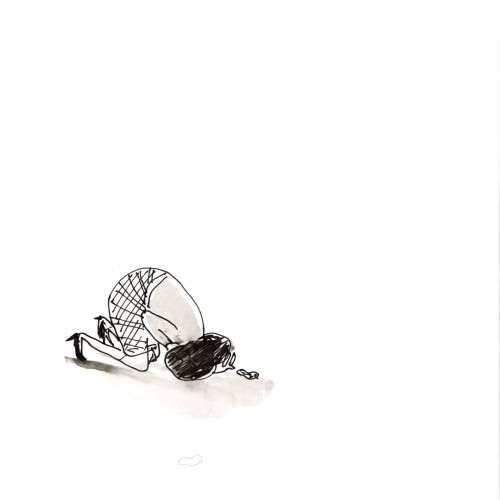
The first several weeks of a new novel, Oates has said, are particularly difficult and demoralizing: “Getting the first draft finished is like pushing a peanut with your nose across a very dirty floor.”
From Daily Rituals: How Artists Work by Mason Currey
#dailyrituals #inktober #JoyceCarolOates @masoncurrey